
・6 min read
What is an NFT? A complete guide to how they work
Author
Khalid AkbaryLearn what an NFT is, what gives them value, and how to trade them. Then, see how these tokens help you track who owns digital assets on the blockchain.
In 2021, a rare CryptoPunk NFT sold for more than $11 million. The NFT market boomed, with everything from memes to property flying around Web3. But with more awareness of NFTs came questions about where their value comes from: Ownership and on-chain identity or the collectible itself.
In this guide, we’ll explore what an NFT is, what NFTs mean in practice, and how NFTs create real value for digital communities.
What are NFTs?
Non-fungible tokens, or NFTs, are blockchain-based digital tokens that prove who owns a specific asset and confirm that it’s authentic. Each NFT has a unique identifier on a blockchain called a Token ID. This identifier sits inside a specific smart contract and differentiates that NFT from every other token in the collection. The NFT smart contract and the Token ID work together like a serial number.
That ID links to metadata that describes the NFT in detail. It records the creator’s wallet address and shows the current owner. The blockchain stores all this information permanently, and anyone can see it on-chain. So, NFTs work as a technical standard for registering unique items on the blockchain rather than as a standalone product category.
Creators use NFTs to represent many types of assets, like digital art, in-game items, and tokenized claims tied to physical objects. The underlying file usually sits off-chain on another storage network while the blockchain record links to it and preserves proof that the referenced item belongs to the holder.
How do NFTs work?
NFTs rely on smart contracts, token standards, and on-chain transactions to create and manage ownership records. This process works over a few stages.
NFT minting and metadata recording
Most traditional NFTs are minted. To mint an NFT, a creator uploads a digital file (like a JPG or MP3) or defines the asset inside a smart contract. Then, they enter metadata – identifying information like the description, storage link, and creator wallet – into the smart contract.
When the creator submits the minting transaction, the blockchain assigns a Token ID to the new asset and records it alongside the metadata.
Blockchains and standards
NFTs usually follow token standards. These standards are a set of rules that control how items work on a blockchain. Some common standards include ERC-721, which supports individually distinct tokens, and ERC-1155, which lets creators mint multiple related items and batch transactions. Both standards define how wallets and marketplaces read and process NFT transfers.
Next, creators choose the blockchain that will host the NFT. Popular options include Ethereum, Polygon, and Solana. The creator needs to pay gas fees to validators for every NFT minted, and some marketplaces apply listing or service fees, too.
Ownership and royalties
Once it’s been minted, the NFT becomes visible in compatible wallets and NFT marketplaces like OpenSea, Rarible, and Magic Eden. From there, the NFT creator can list the item for sale. Users purchase and transfer NFTs through on-chain transactions, connecting their wallet and signing the purchase transaction with their private key. The network validates the transaction and updates NFT ownership from the seller’s wallet to the buyer’s wallet.
Smart contracts can include resale NFT royalty logic, where the original owner gets a share of every sale in the future, but marketplaces have to enforce this logic individually.
NFTs vs. fungible assets
NFTs represent unique, non-interchangeable assets. Each token carries its own identity and potential value. You can’t exchange one NFT for another on a one-to-one basis as an equal unit, even if both come from the same NFT collection.
Fungible assets behave differently. For example, Bitcoin (BTC), Ethereum (ETH), and USD are interchangeable. Currency units and fungible tokens can be divided and combined without changing their economic meaning. One BTC has the same value as another BTC of equal amount.
The main difference in fungible versus non-fungible assets is their interchangeability and valuation. NFTs record ownership of singular assets. Fungible tokens represent standardized and divisible units, like currencies.
Even though NFTs (versus cryptocurrencies) are not interchangeable, they’re still transferable property. They can be bought, sold, gifted, or moved between wallets. In many regions, disposing of an NFT can trigger a taxable event. Those gains or losses are calculated using the purchase price and sale price recorded on the chain.
What gives NFTs value?
There are several factors that determine NFT value.
Scarcity and supply mechanics
Supply-and-demand is a major part of NFT value. Some NFT collections, like CryptoPunks, have a fixed supply of collectibles that never increases. Others release NFTs in phases or burn older tokens to issue new editions without growing the supply. The scarcity of a 10,000-piece collection with a small number of ultra-rare traits can increase the value of all the NFTs in it.
Creator reputation
Digital artists, studios, and brands with a verifiable history and strong community tend to attract stronger and more stable demand. For example, Pudgy Penguins, led by CEO Luca Netz, grew their market confidence after the team consistently developed the brand across social media and retail markets like Walmart.
Utility
Some NFTs provide utility beyond collectibility. Tokens can give owners access to tools, communities, or real-world experiences. For example, NBA Top Shot sells NFTs of important basketball clips as virtual memorabilia, and VeeFriends NFTs give holders access to exclusive community events like VeeCon.
Market demand and liquidity
Collections with steady trading activity offer more predictable buying and selling conditions, while thin NFT markets can lead to slower sales and wider price gaps.
Provenance and on-chain history
Genuine NFTs are easy to identify. Buyers can verify the original NFT mint, confirm that it comes from the official contract, and review past ownership and sales details on the blockchain. This gives buyers confidence about purchasing the token and can influence the value of the NFT.
How to buy NFTs
Buying an NFT starts with setting up a compatible wallet and funding it with a cryptocurrency. NFT wallets like MetaMask, Coinbase Wallet, or Phantom let you securely connect to NFT marketplaces and complete purchases.
Marketplaces usually show the NFT’s floor price, rarity traits, and listing history. The floor price is the lowest active listing in the collection. Rarity traits help explain why some tokens are priced higher than others, and listing history reveals who owned the NFT before.
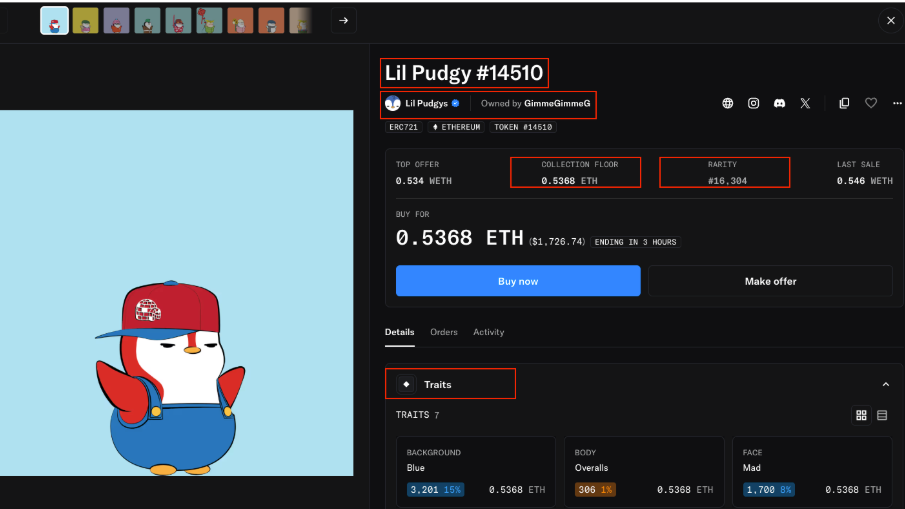
Source: Opensea.io
Before you press “buy,” make sure the collection is legitimate. Check the contract address against the official project website and review the creator profile. It’s also a good idea to skim the project’s community channels like X or Discord to make sure the listing matches the real launch. Avoid links shared through DMs, verify URLs manually, and review transaction prompts before signing.
Once you’ve chosen an NFT, review the price and gas fees, and sign the transaction. The blockchain processes the transfer, and the NFT appears in your wallet for your use.
Benefits of NFTs
There are a few advantages of NFTs over other kinds of digital assets:
- Security: Smart contracts use cryptographic security to safeguard asset records from hacks.
- Market efficiency: NFTs often provide a faster and more cost-effective way to purchase collectibles.
- Intellectual property (IP): NFTs help protect IP, such as books and songs, by providing a clear trail of ownership through blockchain technology.
- Authenticity: Verifying the authenticity of NFTs before purchasing them is straightforward with smart contract tracking.
- Community: Owning NFTs can grant access to exclusive online groups and events, building a stronger Web3 community.
- Transparency: The blockchain records every transaction detail, including the wallet addresses involved in a trade, so it’s easy to identify who owned it and when.
- Immutability: The blockchain’s permanent nature means that metadata and other information about ownership can’t be altered.
Challenges of NFTs
NFTs aren’t for everyone. Here are a few things to consider when looking into buying these digital assets:
- Complexity: Fully understanding the blockchain technology behind NFTs takes more effort than digital assets like cryptocurrencies.
- Legal and regulatory liability: It’s not always possible to purchase NFTs completely anonymously. While regulations around NFTs are still evolving, the IRS considers NFT trading a taxable event. Some NFT marketplaces enforce strict know-your-customer (KYC) requirements, requiring buyers and sellers to provide government IDs and other identifying information like proof of address.
- Price volatility: NFT market demand can cause values to fluctuate, as can creator reputation and perceived rarity. Unlike other kinds of investments and despite blockchain transparency, NFTs lack historical pricing data and established valuation models. This makes future price predictions difficult.
- Scams: NFTs aren’t immune to security flaws. Common scams include phishing, pump-and-dumps, and counterfeit NFTs.
- Hidden fees: Marketplaces may charge high fees (or hide them) for facilitating trades, which can discourage creators and buyers.
Track and manage your NFTs with confidence
Once your collection of digital assets starts growing, you'll need an easy way to track it all. CoinTracker can help.
CoinTracker connects to over 50,000 smart contracts, NFT marketplaces, and exchanges. Our Portfolio Tracker collects your trades and updates in real time, regardless of which blockchain your NFTs are on.
Worried about reporting your crypto taxes? CoinTracker makes it simple. Join over three million users who trust us for hassle-free tax reporting. Start for free today.
Disclaimer: This post is informational only and is not intended as tax advice. For tax advice, please consult a tax professional.